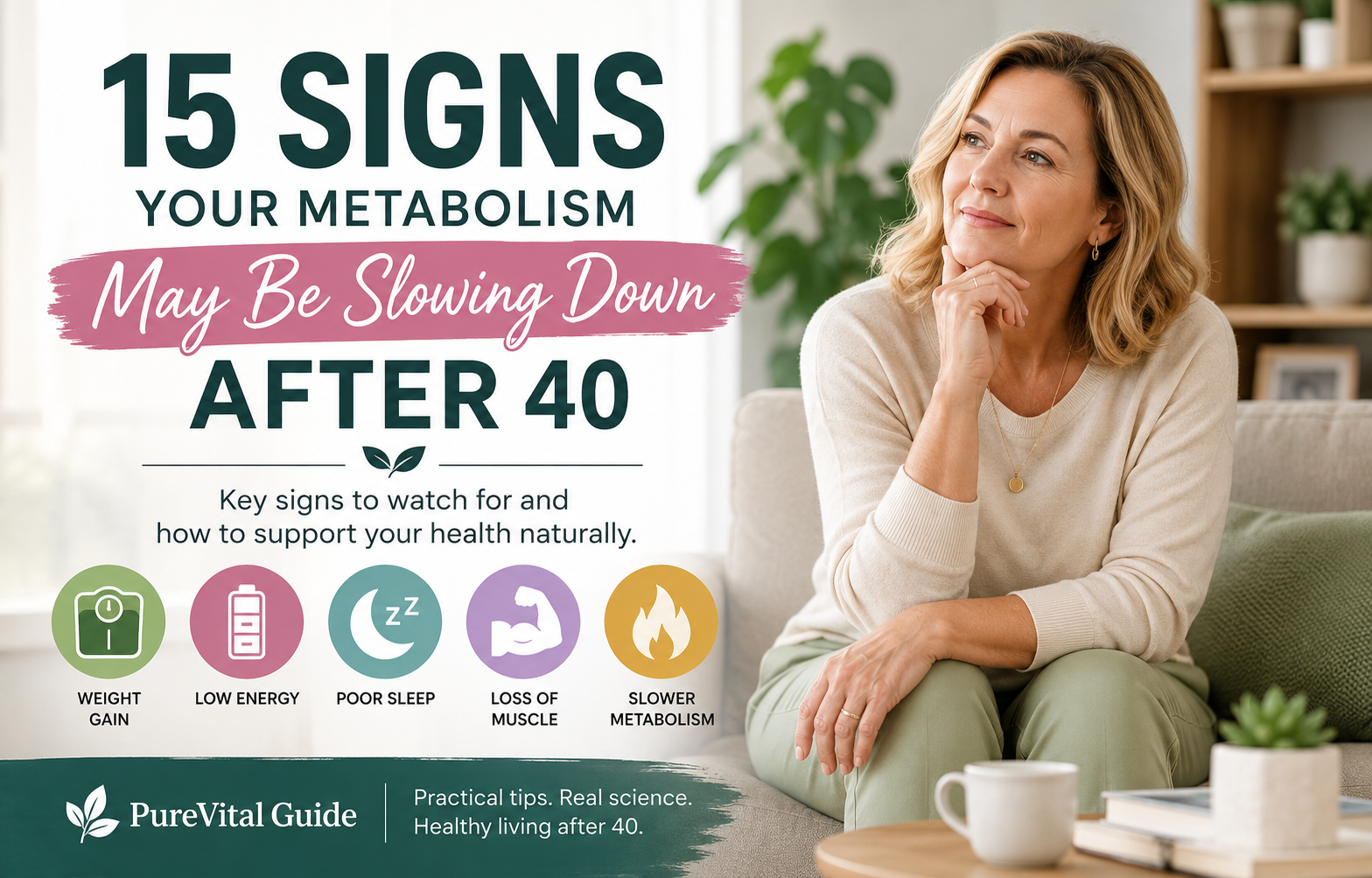
15 Signs Your Metabolism May Be Slowing Down After 40
15 Signs Your Metabolism May Be Slowing Down After 40
Last Updated: July 2026
Many women notice subtle changes after turning 40. Maybe your favorite jeans feel tighter, your energy isn’t what it used to be, or losing a few pounds suddenly feels much harder than it did years ago.
It’s easy to blame everything on a “slow metabolism,” but the truth is more complex.
Your metabolism naturally changes with age, and factors such as muscle loss, hormonal shifts, sleep quality, stress, and physical activity all play important roles in how your body uses energy.
While no single symptom can confirm that your metabolism has slowed, certain patterns may suggest it’s time to take a closer look at your overall lifestyle and health.
In this guide, we’ll explore 15 common signs that may be associated with changes in metabolism after 40, along with practical tips to help you support your long-term well-being.
Table of Contents
- What Is Metabolism?
- Why Metabolism Changes After 40
- 15 Possible Signs of a Slower Metabolism
- When to Talk to Your Doctor
- Healthy Habits That Support Metabolic Health
- Frequently Asked Questions
- Final Thoughts
Quick Summary
If you’re short on time, here’s what you should know:
- Metabolism naturally changes with age.
- Muscle loss and hormonal changes are common contributors.
- Many symptoms can have more than one cause.
- Healthy habits often have a greater impact than “metabolism boosters.”
- If symptoms are persistent or severe, consult a healthcare professional.
What Is Metabolism?
Metabolism is the process by which your body converts the food you eat into the energy needed for every function—from breathing and digestion to walking, thinking, and exercising.
Your metabolic rate is influenced by several factors, including:
- Age
- Genetics
- Muscle mass
- Physical activity
- Hormones
- Nutrition
- Sleep quality
- Overall health
Rather than thinking of metabolism as simply “fast” or “slow,” it’s more accurate to view it as a complex system that changes throughout life.

Why Does Metabolism Change After 40?
Several natural changes occur during midlife that can affect how efficiently your body uses energy.
These include:
- Gradual loss of muscle mass.
- Hormonal fluctuations during perimenopause and menopause.
- Reduced daily physical activity.
- Changes in sleep quality.
- Increased stress.
- Lifestyle changes associated with work and family responsibilities.
These factors don’t mean weight gain is inevitable—but they do mean healthy habits become increasingly important.
1. Weight Gain Without Major Lifestyle Changes
One of the first signs many women notice is gradual weight gain, even though their eating habits haven’t changed significantly.
This doesn’t necessarily mean your metabolism has “stopped working.”
Several factors may contribute, including:
- Reduced muscle mass
- Hormonal changes
- Less daily movement
- Increased calorie intake over time
- Poor sleep
A gradual increase in body weight is common during midlife, but balanced nutrition and regular activity can help support healthy weight management.

2. Feeling Tired More Often
Persistent fatigue isn’t always related to metabolism.
However, low energy may be influenced by:
- Poor sleep
- Stress
- Nutritional deficiencies
- Reduced physical activity
- Medical conditions
If you’re constantly feeling exhausted despite getting adequate rest, it’s worth discussing your symptoms with a healthcare provider.
3. Losing Muscle Strength
Muscle naturally declines with age—a process known as age-related muscle loss.
You may notice:
- Difficulty lifting heavy objects.
- Reduced exercise performance.
- Feeling weaker during daily activities.
- Slower recovery after workouts.
Strength training and adequate protein intake can help support muscle maintenance as you age.
4. Increased Belly Fat
Many women notice that body fat gradually shifts toward the abdominal area during perimenopause and menopause.
Hormonal changes—particularly declining estrogen levels—can influence where fat is stored.
Although this change is common, regular exercise, a balanced diet, stress management, and quality sleep all contribute to overall health.
5. Feeling Cold More Frequently
Some people with a lower metabolic rate or certain medical conditions may notice increased sensitivity to cold temperatures.
However, feeling cold can also be associated with conditions such as thyroid disorders, anemia, or inadequate calorie intake.
If this symptom is new or persistent, it’s important to seek medical advice rather than assuming metabolism is the only cause.
6. Slower Recovery After Exercise
Have you noticed that your body takes longer to recover after a workout than it used to?
While recovery naturally changes with age, several factors can contribute to slower recovery, including:
- Reduced muscle mass
- Lower physical activity levels
- Poor sleep quality
- Inadequate protein intake
- High stress levels
Recovery is an essential part of a healthy fitness routine. Giving your body enough time to rest, staying hydrated, and eating balanced meals can all support muscle repair and overall well-being.
7. Increased Food Cravings
Many women experience stronger cravings during midlife.
These cravings are not always a sign of poor self-control.
They may be influenced by:
- Hormonal fluctuations
- Lack of sleep
- Emotional stress
- Blood sugar fluctuations
- Skipping meals
Instead of trying to eliminate cravings completely, focus on building balanced meals that include protein, fiber, and healthy fats to help you stay satisfied longer.
8. Difficulty Losing Weight
One of the most common concerns after 40 is that weight loss seems to require much more effort than before.
While metabolism plays a role, other factors may also contribute, such as:
- Reduced physical activity
- Loss of muscle mass
- Menopause
- Chronic stress
- Sleep deprivation
- Certain medications
Rather than searching for a “magic solution,” sustainable habits remain the most effective long-term approach.
9. Reduced Stamina
Daily activities that once felt easy may begin to require more effort.
You may notice:
- Becoming tired more quickly during walks.
- Difficulty climbing stairs.
- Feeling out of breath during physical activity.
- Needing longer recovery periods.
Regular cardiovascular exercise combined with strength training can help improve endurance over time.

10. Brain Fog
Many women describe periods of forgetfulness or difficulty concentrating during their 40s and 50s.
Possible contributing factors include:
- Poor sleep
- Stress
- Hormonal changes
- Mental overload
- Certain medical conditions
Simple lifestyle habits such as regular physical activity, good sleep hygiene, and balanced nutrition may help support cognitive health.
11. Poor Sleep Quality
Sleep becomes increasingly important as we age.
Signs of poor sleep include:
- Waking up frequently during the night
- Difficulty falling asleep
- Feeling tired after a full night’s sleep
- Daytime sleepiness
Creating a relaxing bedtime routine and maintaining a consistent sleep schedule may improve sleep quality over time.
12. Digestive Changes
Digestive health can also change during midlife.
Some women experience:
- Bloating
- Constipation
- Slower digestion
- Increased food sensitivities
Eating enough fiber, drinking plenty of water, and staying physically active can support digestive health.
13. Dry Skin and Hair Changes
While these changes are primarily associated with aging and hormonal shifts, they may also occur alongside other health changes.
Healthy nutrition, hydration, and regular medical checkups can help identify potential underlying causes.
14. Lower Motivation to Exercise
Sometimes the challenge isn’t physical—it’s simply finding the motivation to stay active.
If you’ve stopped exercising regularly, remember that you don’t have to start with intense workouts.
Begin with manageable activities such as:
- Walking
- Stretching
- Yoga
- Swimming
- Cycling
The best exercise is the one you enjoy and can maintain consistently.
15. Feeling “Different” Overall
Many women describe a general feeling that their bodies have changed after 40.
You may not be able to point to one specific symptom, but you simply don’t feel like yourself.
This is completely understandable.
Midlife is a period of significant physical and hormonal changes.
The good news is that healthy daily habits can help you feel stronger, more energetic, and more confident over time.
When Should You Talk to Your Doctor?
Although many metabolic changes are a normal part of aging, certain symptoms deserve medical attention.
Schedule an appointment with a healthcare professional if you experience:
- Rapid or unexplained weight changes
- Persistent fatigue
- Severe weakness
- Ongoing digestive problems
- Hair loss combined with other symptoms
- Feeling unusually cold
- Symptoms that interfere with your daily life
These symptoms may be related to conditions such as thyroid disorders, anemia, diabetes, or other health concerns that require professional evaluation.
Healthy Habits That Support Metabolic Health
Rather than focusing on quick fixes, build habits that support your overall health every day.
These include:
✔ Strength training at least twice per week
✔ Walking regularly
✔ Eating enough protein
✔ Choosing fiber-rich foods
✔ Staying hydrated
✔ Managing stress
✔ Prioritizing quality sleep
✔ Scheduling regular health checkups
Small, consistent actions often produce the most meaningful long-term results.
Frequently Asked Questions
Is it normal for metabolism to slow down after 40?
Yes. Some metabolic changes naturally occur with age, largely due to gradual muscle loss, hormonal changes, and lifestyle factors.
Can menopause affect metabolism?
Menopause may influence body composition, fat distribution, and energy balance. However, maintaining healthy habits can help support overall wellness during this transition.
Can strength training help?
Yes. Strength training helps preserve muscle mass, which plays an important role in healthy aging and overall energy expenditure.
Should I take metabolism supplements?
Supplements are not a substitute for a balanced diet or healthy lifestyle. Always consult a healthcare professional before using any dietary supplement.
What’s the best first step?
Start with small changes:
- Walk daily.
- Add more protein to your meals.
- Improve your sleep routine.
- Stay hydrated.
- Build consistency rather than chasing perfection.
Final Thoughts
Experiencing changes after 40 does not mean your health is declining beyond your control.
Many of the signs associated with a slower metabolism are influenced by everyday habits that can be improved over time.
Rather than focusing on restrictive diets or miracle products, prioritize sustainable lifestyle changes that support your body for years to come.
Remember, healthy aging isn’t about turning back the clock—it’s about helping your body function at its best through every stage of life.
At PureVital Guide, our goal is to provide reliable, practical, and science-informed wellness content to help you make confident decisions for your health.
References
This article was prepared using educational resources and guidance from respected organizations, including:
- National Institutes of Health (NIH)
- Office of Dietary Supplements (NIH)
- Centers for Disease Control and Prevention (CDC)
- Harvard T.H. Chan School of Public Health
- Mayo Clinic
- Academy of Nutrition and Dietetics
Always consult a qualified healthcare professional for personalized medical advice.
Medical Disclaimer
This article is intended for educational and informational purposes only.
It does not provide medical advice, diagnosis, or treatment.
Always consult your physician or another qualified healthcare provider before making decisions related to your health, diet, exercise, or supplement use.





3 Comments