
Spinach & Cottage Cheese Egg Muffins: Easy High-Protein Breakfast
Prep Time: 10 minutes | Cook Time: 20–25 minutes | Servings: 6 muffins | Difficulty: Easy
Spinach & Cottage Cheese Egg Muffins: Easy High-Protein Breakfast
Busy mornings don’t have to mean skipping breakfast or grabbing something heavily processed on the way out the door.
These Spinach & Cottage Cheese Egg Muffins are an easy make-ahead breakfast made with eggs, creamy cottage cheese, fresh spinach, tomatoes, and simple seasonings.
They’re fluffy, savory, satisfying, and incredibly convenient.
Prepare a batch ahead of time, store them in the refrigerator, and you’ll have a protein-rich breakfast ready for busy mornings.
For women over 40, meals containing adequate protein can be especially valuable as part of an overall lifestyle that supports muscle maintenance, bone health, and healthy aging.
And unlike many breakfast recipes, these muffins are easy to customize with whatever vegetables you already have in your refrigerator.
Let’s make them.
Why You’ll Love These Egg Muffins
These cottage cheese egg muffins are:
- High in protein
- Easy to prepare
- Ready in about 30 minutes
- Packed with vegetables
- Meal-prep friendly
- Naturally portioned
- Easy to customize
- Freezer friendly
- Perfect for busy mornings
- Delicious warm or cold
They’re also portable, making them convenient when breakfast needs to travel with you.

Ingredients
For 6 Egg Muffins
- 6 large eggs
- ½ cup cottage cheese
- 1 cup fresh spinach, chopped
- ½ cup cherry tomatoes, diced
- ¼ cup red bell pepper, finely chopped
- 2 tablespoons green onion, chopped
- ¼ teaspoon garlic powder
- ¼ teaspoon black pepper
- Pinch of salt
- ¼ teaspoon dried oregano, optional
- Olive oil or cooking spray for the muffin pan
Optional Toppings
- Fresh parsley
- Chopped chives
- Crumbled feta
- Red pepper flakes
Equipment You’ll Need
Nothing complicated is required.
You’ll need:
- Mixing bowl
- Whisk
- Cutting board
- Knife
- Measuring cups
- Muffin pan
Silicone muffin molds also work particularly well because the egg muffins release easily after baking.
How to Make Spinach & Cottage Cheese Egg Muffins
Step 1 — Preheat the Oven
Preheat your oven to 350°F (175°C).
Lightly grease six cups of a muffin pan with olive oil or cooking spray.
Step 2 — Prepare the Vegetables
Wash and dry the vegetables.
Finely chop:
- Spinach
- Tomatoes
- Bell pepper
- Green onion
Smaller pieces distribute more evenly throughout the egg mixture.
Step 3 — Whisk the Eggs
Crack the eggs into a large mixing bowl.
Whisk until the yolks and whites are completely combined.
Step 4 — Add the Cottage Cheese
Add the cottage cheese to the eggs.
Whisk again until evenly distributed.
Don’t worry if small pieces of cottage cheese remain visible.
They will soften as the muffins bake.
Step 5 — Add the Vegetables
Stir in the chopped spinach, tomatoes, bell pepper, and green onion.
Add garlic powder, black pepper, salt, and optional oregano.
Mix gently.
Step 6 — Fill the Muffin Cups
Divide the mixture evenly among six prepared muffin cups.
Fill each approximately ¾ full.
Avoid filling them completely because the eggs will expand while baking.
Step 7 — Bake
Bake for approximately 20–25 minutes, or until the centers are set and the tops are lightly golden.
Cooking times may vary depending on your oven and muffin pan.
Step 8 — Cool Slightly
Allow the muffins to cool in the pan for about five minutes.
Carefully remove them and transfer to a plate or cooling rack.
Serve warm or refrigerate for later.
Approximate Nutrition
Nutritional values vary depending on the cottage cheese, vegetables, toppings, and exact quantities used.
For 2 egg muffins, a typical serving may provide approximately:
- Calories: 180–230
- Protein: 18–22 g
- Carbohydrates: 5–8 g
- Fat: 10–14 g
- Fiber: 1–3 g
These numbers are estimates only.
For precise nutrition information, calculate values using the exact ingredients and brands you use.

Why Add Cottage Cheese to Egg Muffins?
Cottage cheese might seem like an unusual ingredient in egg muffins, but it works beautifully.
It contributes:
- Protein
- Calcium
- Creaminess
- Moisture
- A softer texture
Eggs already provide high-quality protein, but adding cottage cheese increases the protein content while helping prevent the muffins from becoming overly dry.
Its mild flavor also blends easily with vegetables and seasonings.
Why Protein Matters After 40
Protein plays an important role throughout adulthood.
It contributes to the maintenance and growth of muscle mass and helps maintain normal bones.
As we age, maintaining muscle becomes increasingly important for:
- Strength
- Mobility
- Balance
- Physical function
- Independence
Protein alone isn’t the entire solution.
Regular physical activity—particularly resistance training—along with adequate nutrition is important for maintaining muscle throughout adulthood.
Including protein-rich foods at breakfast can help distribute protein intake more evenly across the day.
Why Add Spinach?
Spinach adds much more than color.
This leafy green provides several nutrients, including:
- Folate
- Vitamin K
- Vitamin A precursors
- Vitamin C
- Magnesium
- Potassium
It also works particularly well in egg recipes because its mild flavor blends easily with other ingredients.
5 Delicious Egg Muffin Variations
Once you’ve mastered the basic recipe, changing the flavors is easy.
1. Mediterranean Egg Muffins
Add:
- Spinach
- Cherry tomatoes
- Feta cheese
- Red onion
- Oregano
Finish with fresh parsley.
This version pairs beautifully with a Mediterranean-style breakfast.
2. Mushroom & Spinach Egg Muffins
Add:
- Sautéed mushrooms
- Spinach
- Green onion
- Cottage cheese
- Black pepper
Important Tip
Cook the mushrooms before adding them.
Mushrooms release significant amounts of water while cooking, which could otherwise make the muffins soggy.
3. Broccoli & Cheddar Egg Muffins
Add:
- Finely chopped cooked broccoli
- Cottage cheese
- A small amount of shredded cheddar
- Black pepper
This is a great way to use leftover broccoli.
4. Bell Pepper & Feta Egg Muffins
Combine:
- Red bell pepper
- Yellow bell pepper
- Spinach
- Feta
- Oregano
The colorful peppers make these muffins especially attractive.
5. Tomato & Basil Egg Muffins
Add:
- Cherry tomatoes
- Fresh basil
- Cottage cheese
- Black pepper
Finish with a small amount of grated Parmesan if desired.
The Secret to Fluffy Egg Muffins
Egg muffins can sometimes become rubbery or dry.
A few simple tricks can help.
Don’t Overbake Them
Remove the muffins once the centers are set.
Overcooking eggs can create a dry texture.
Use Cottage Cheese
The added moisture helps keep the muffins softer.
Don’t Add Too Many Watery Vegetables
Tomatoes, mushrooms, zucchini, and some other vegetables release moisture.
Use moderate amounts or cook watery vegetables first.
Whisk the Eggs Well
Whisking incorporates air and helps create a lighter texture.
How to Build a Complete Breakfast
Two egg muffins can form the protein-rich centerpiece of your breakfast.
Pair them with:
Option 1
Egg muffins + whole-grain toast + berries
Option 2
Egg muffins + avocado + orange slices
Option 3
Egg muffins + oatmeal + blueberries
Option 4
Egg muffins + whole-grain English muffin + strawberries
Option 5
Egg muffins + Greek yogurt + fresh fruit
This approach allows you to combine protein with fiber-rich carbohydrates, fruit, vegetables, and healthy fats.
How to Meal Prep Egg Muffins
These muffins were made for meal prep.
Prepare a batch on Sunday and you’ll have an easy breakfast available for several mornings.
Step 1
Bake the muffins.
Step 2
Allow them to cool completely.
Step 3
Transfer them to an airtight container.
Step 4
Refrigerate.
Step 5
Reheat only the portion you’re planning to eat.
This makes busy weekday breakfasts much easier.
How Long Do Egg Muffins Last in the Refrigerator?
For best quality, store cooked egg muffins in a sealed container in the refrigerator and enjoy them within approximately 3–4 days.
Make sure they cool before sealing the container to reduce excess condensation.
Always discard food that develops an unusual smell, appearance, or texture.

Can You Freeze Egg Muffins?
Yes.
Egg muffins can be frozen for longer storage.
Allow them to cool completely first.
Then:
- Place the muffins on a tray.
- Freeze until firm.
- Transfer them to a freezer-safe container or bag.
- Label with the date.
For best quality, use frozen egg muffins within approximately 1–2 months.
How to Reheat Egg Muffins
From the Refrigerator
Microwave for approximately 30–60 seconds, depending on your microwave.
You can also warm them gently in the oven.
From Frozen
Thaw overnight in the refrigerator before reheating for the best texture.
Heating times vary, so make sure the center is thoroughly heated before eating.
Common Egg Muffin Mistakes
Overfilling the Muffin Cups
Eggs expand while baking.
Fill each cup only about three-quarters full.
Using Too Many Vegetables
Vegetables are nutritious, but excessive quantities can prevent the egg mixture from setting properly.
Balance is important.
Adding Raw Watery Vegetables
Mushrooms and zucchini can release significant amounts of water.
Cook them first when necessary.
Overbaking
Overcooked egg muffins can become rubbery.
Check them toward the lower end of the suggested cooking time.
Skipping the Grease
Eggs stick easily to traditional muffin pans.
Grease the pan thoroughly or use silicone molds.
Frequently Asked Questions
Are cottage cheese egg muffins high in protein?
They can be.
Both eggs and cottage cheese provide protein, making them a convenient protein-rich breakfast option.
The exact amount depends on your serving size and ingredients.
Can I make egg muffins without cottage cheese?
Yes.
The cottage cheese can be omitted, although the final texture and nutritional profile will change.
Greek yogurt may work in some recipes as an alternative, but results can vary.
Can I use frozen spinach?
Yes.
Thaw it completely and squeeze out as much excess moisture as possible before adding it to the egg mixture.
Can I make these egg muffins dairy-free?
Yes.
Omit the cottage cheese and any other cheese.
The muffins will have a different texture but can still be prepared successfully.
Can I eat egg muffins cold?
Cooked egg muffins can be eaten cold when they have been stored safely in the refrigerator, although many people prefer them warm.
Can I double the recipe?
Absolutely.
Double the ingredients to make approximately 12 muffins.
Cooking time should remain similar, although ovens and pans vary.
Are these good for meal prep?
Yes.
They’re one of the easiest protein-rich breakfasts to prepare ahead because they’re already divided into individual portions.
Recipe Card
Spinach & Cottage Cheese Egg Muffins
Prep Time: 10 minutes
Cook Time: 20–25 minutes
Total Time: 30–35 minutes
Yield: 6 muffins
Serving Suggestion: 2 muffins
Difficulty: Easy
Ingredients
- 6 large eggs
- ½ cup cottage cheese
- 1 cup chopped fresh spinach
- ½ cup diced cherry tomatoes
- ¼ cup finely chopped red bell pepper
- 2 tbsp chopped green onion
- ¼ tsp garlic powder
- ¼ tsp black pepper
- Pinch of salt
- ¼ tsp dried oregano, optional
- Olive oil or cooking spray
Instructions
- Preheat oven to 350°F (175°C).
- Grease six muffin cups.
- Chop the vegetables.
- Whisk eggs in a large bowl.
- Add cottage cheese and mix.
- Stir in spinach, tomatoes, bell pepper, and green onion.
- Add seasonings.
- Divide mixture among muffin cups.
- Bake for 20–25 minutes or until set.
- Cool for five minutes before removing.
- Serve immediately or refrigerate for meal prep.
Final Thoughts
A healthy breakfast doesn’t need to take half an hour every morning.
Sometimes the easiest strategy is simply preparing ahead.
These Spinach & Cottage Cheese Egg Muffins combine eggs, cottage cheese, and colorful vegetables into convenient individual portions that can be prepared once and enjoyed throughout the week.
They’re also incredibly adaptable.
Change the vegetables, experiment with herbs, add a little feta, or use whatever produce needs to be eaten in your refrigerator.
Pair two muffins with fruit, whole grains, or avocado and you have the foundation for a satisfying breakfast.
Simple recipes like this are exactly what sustainable healthy eating should be: nutritious, enjoyable, practical, and easy to repeat.
Related Articles
Continue exploring PureVital Guide:
- High-Protein Overnight Oats for Women Over 40: 5 Easy Variations
- Greek Yogurt Berry Protein Parfait: An Easy High-Protein Breakfast
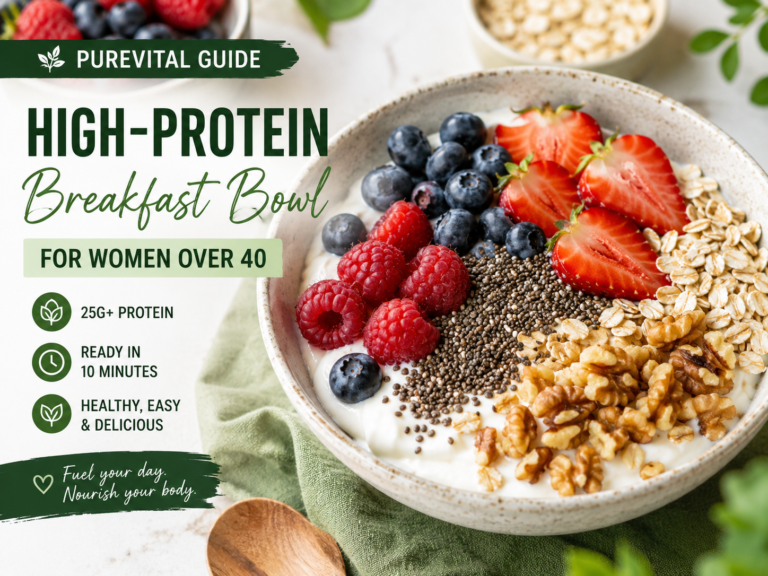
- High-Protein Breakfast Bowl for Women Over 40
- Best High-Protein Breakfast Ideas for Women Over 40
- Protein After 40: Why Women Need More Than They Think
- How Much Protein Do Women Over 40 Really Need?
- 7-Day High-Protein Meal Plan for Women Over 40
Medical Disclaimer
This recipe and article are provided for general educational purposes and should not be considered medical or individualized nutritional advice.
Nutritional needs vary based on age, health conditions, medications, allergies, activity levels, and other individual factors. Consult a qualified healthcare professional or registered dietitian if you need personalized dietary guidance.


4 Comments