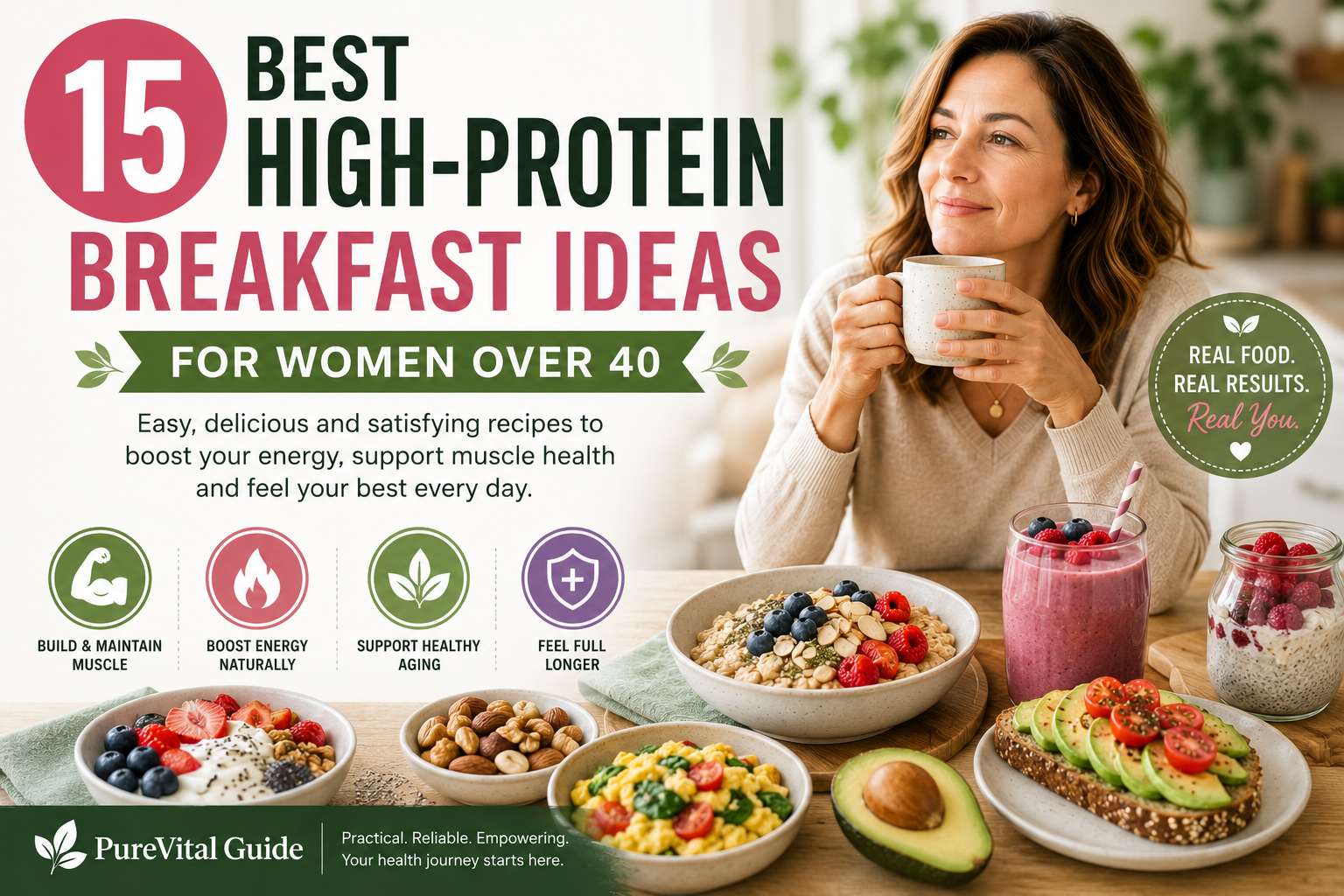
15 Best High-Protein Breakfast Ideas for Women Over 40
15 Best High-Protein Breakfast Ideas for Women Over 40
Last Updated: July 2026
Breakfast can be one of the easiest opportunities to add more protein to your day—yet many traditional breakfast foods are surprisingly low in it.
Toast with jam, a bowl of sugary cereal, or coffee on the run may be convenient, but these options may not provide the balanced nutrition you need to feel satisfied throughout the morning.
For women over 40, protein deserves special attention.
As we age, maintaining muscle mass becomes increasingly important for strength, mobility, and healthy aging. Protein provides amino acids the body uses to build and repair tissues, including muscle.
The good news?
A high-protein breakfast doesn’t need to be complicated, expensive, or boring.
From creamy Greek yogurt bowls to savory egg dishes and simple overnight oats, there are plenty of delicious ways to add protein to your morning.
Here are 15 easy high-protein breakfast ideas to inspire your next meal.
Quick Summary
Looking for quick ideas? Start with these protein-rich breakfast options:
- Greek yogurt and berry bowl
- Cottage cheese breakfast bowl
- Veggie egg scramble
- Overnight oats with Greek yogurt
- Smoked salmon and avocado toast
- Protein smoothie
- Egg and black bean breakfast bowl
- Chia yogurt pudding
- Turkey and egg breakfast wrap
- Quinoa breakfast bowl
- Tofu scramble
- Cottage cheese toast
- Breakfast egg muffins
- Greek yogurt pancakes
- Salmon and egg breakfast plate
The exact amount of protein in each meal will vary depending on the ingredients, brands, and serving sizes you choose.

Why Protein Matters After 40
Protein is essential at every stage of life, but it becomes especially important as we get older.
Adults can gradually lose muscle mass with age. Staying physically active—particularly through resistance exercise—and eating adequate protein can help support muscle maintenance.
Protein also contributes to satiety, which is the feeling of fullness and satisfaction after eating.
A balanced breakfast containing protein, fiber, and nutrient-rich foods may help you create a more satisfying start to the day.
Protein-rich foods can include:
- Eggs
- Greek yogurt
- Cottage cheese
- Fish
- Poultry
- Beans
- Lentils
- Soy foods
- Nuts
- Seeds
Instead of thinking of protein as something only athletes need, consider it an important part of a balanced approach to healthy aging.
How Much Protein Should You Eat at Breakfast?
There is no single breakfast protein target that is right for every woman.
Your individual protein needs may depend on your:
- Age
- Body size
- Activity level
- Health status
- Dietary preferences
- Fitness goals
Rather than obsessing over an exact number, a practical first step is to include a meaningful protein source at breakfast.
If you have kidney disease or another medical condition that affects your nutritional needs, talk with your healthcare professional or a registered dietitian before significantly increasing your protein intake.
Now, let’s get to the breakfast ideas.
1. Greek Yogurt and Berry Power Bowl
A Greek yogurt bowl is one of the simplest protein-rich breakfasts you can prepare.
What You’ll Need
- Plain Greek yogurt
- Blueberries or strawberries
- Chia seeds
- Chopped walnuts
- A sprinkle of cinnamon
Why We Love It
Greek yogurt provides protein, while berries and chia seeds add fiber.
Walnuts contribute healthy fats and give the bowl a satisfying crunch.
Choose plain yogurt and add fresh fruit for sweetness if you want to limit added sugars.
Quick Tip: Prepare your toppings the night before for an even faster morning breakfast.
2. Cottage Cheese Breakfast Bowl
Cottage cheese isn’t just a snack—it can make an incredibly easy breakfast.
What You’ll Need
- Cottage cheese
- Sliced peaches or berries
- Ground flaxseed
- Chopped almonds
Why We Love It
Cottage cheese is naturally rich in protein and pairs well with both sweet and savory ingredients.
For a savory version, replace the fruit with sliced tomatoes, cucumber, and black pepper.
3. Veggie Egg Scramble
Eggs are a breakfast classic for a reason.
What You’ll Need
- Eggs
- Spinach
- Bell peppers
- Mushrooms
- A small amount of olive oil
- Black pepper and herbs
How to Make It
Sauté the vegetables until tender.
Add beaten eggs and gently scramble until cooked.
Serve with fresh fruit or a slice of whole-grain toast.
Why We Love It
This breakfast combines protein from eggs with colorful vegetables.
It’s also easy to customize with whatever vegetables you already have in your refrigerator.
4. High-Protein Overnight Oats
Traditional oatmeal can be made more protein-rich with a few simple additions.
What You’ll Need
- Rolled oats
- Plain Greek yogurt
- Milk or an unsweetened fortified milk alternative
- Chia seeds
- Berries
How to Make It
Combine all ingredients in a jar.
Cover and refrigerate overnight.
In the morning, stir and add your favorite toppings.
Why We Love It
Overnight oats are perfect for busy mornings and can be prepared ahead of time.
Greek yogurt helps increase the protein content compared with oats alone.

5. Smoked Salmon and Avocado Toast
Looking for a savory breakfast?
Try upgrading your avocado toast.
What You’ll Need
- Whole-grain bread
- Avocado
- Smoked salmon
- Tomato or cucumber
- Fresh herbs
Why We Love It
Salmon provides protein and omega-3 fatty acids.
Whole-grain bread and vegetables can add fiber, while avocado contributes unsaturated fats.
Note: Smoked salmon can be high in sodium, so portion size and your overall dietary pattern matter.
6. Berry Protein Smoothie
A smoothie can be a convenient breakfast when you’re short on time.
What You’ll Need
- Plain Greek yogurt
- Frozen berries
- Milk or an unsweetened fortified milk alternative
- Spinach
- Chia or ground flaxseed
Blend until smooth.
Why We Love It
This smoothie combines protein-rich Greek yogurt with fruit and seeds.
Unlike a juice-only drink, the addition of protein and fiber-rich ingredients can make it a more balanced breakfast.
Optional: Some people use protein powder for convenience. Choose products carefully and discuss supplement use with a healthcare professional when appropriate.
7. Egg and Black Bean Breakfast Bowl
Beans for breakfast?
Absolutely.
What You’ll Need
- Scrambled or poached eggs
- Black beans
- Sautéed spinach
- Diced tomatoes
- Avocado
- Salsa
Why We Love It
Eggs and black beans provide protein, while beans and vegetables add fiber.
This savory breakfast is especially satisfying and can easily be prepared with leftovers.
8. Chia and Greek Yogurt Breakfast Pudding
Chia pudding is popular, but adding Greek yogurt can make it more protein-rich.
What You’ll Need
- Chia seeds
- Plain Greek yogurt
- Milk or a fortified milk alternative
- Vanilla
- Fresh berries
How to Make It
Mix the ingredients and refrigerate for several hours or overnight.
Top with berries before serving.
Why We Love It
It’s easy to prepare ahead and works well for mornings when you don’t have time to cook.
9. Turkey and Egg Breakfast Wrap
A breakfast wrap can be both convenient and satisfying.
What You’ll Need
- Whole-grain tortilla
- Scrambled eggs
- Cooked turkey
- Spinach
- Tomato
- Avocado
How to Make It
Add the ingredients to the tortilla, roll tightly, and enjoy.
Why We Love It
The combination of eggs and turkey provides protein, while vegetables add color and nutrients.
When using packaged turkey products, check the nutrition label if sodium is a concern.
10. Quinoa Breakfast Bowl
Quinoa isn’t only for lunch and dinner.
It can also be used as the base for a warm breakfast bowl.
What You’ll Need
- Cooked quinoa
- Greek yogurt
- Berries
- Pumpkin seeds
- Cinnamon
Why We Love It
Quinoa provides plant protein and fiber.
Pairing it with Greek yogurt and seeds creates a balanced mix of protein-rich ingredients.
11. Savory Tofu Scramble
For a plant-based breakfast, tofu is a versatile option.
What You’ll Need
- Firm tofu
- Spinach
- Tomatoes
- Bell peppers
- Turmeric
- Black pepper
How to Make It
Crumble the tofu into a skillet.
Add vegetables and seasonings.
Cook until the vegetables are tender and the tofu is heated through.
Why We Love It
Tofu provides plant-based protein and works beautifully with savory breakfast flavors.
12. Cottage Cheese Toast
This might become your new favorite five-minute breakfast.
What You’ll Need
- Whole-grain toast
- Cottage cheese
- Tomato slices
- Black pepper
- Fresh herbs
Spread cottage cheese over toast and add the toppings.
For a sweet version, use berries and cinnamon instead.
Why We Love It
It’s simple, versatile, and easy to prepare on busy mornings.
13. Make-Ahead Breakfast Egg Muffins
Egg muffins are ideal for meal prep.
What You’ll Need
- Eggs
- Spinach
- Bell peppers
- Mushrooms
- A small amount of cheese, if desired
How to Make Them
Preheat the oven.
Whisk the eggs and stir in chopped vegetables.
Pour the mixture into a prepared muffin tin.
Bake until the eggs are fully set.
Store safely in the refrigerator and reheat when ready to eat.
Why We Love Them
You can prepare several portions at once, making healthy breakfasts easier during a busy week.
Pair them with fruit, whole-grain toast, or Greek yogurt for a more complete meal.
14. Greek Yogurt Pancakes
Yes, pancakes can be part of a balanced breakfast.
What You’ll Need
- Oats or oat flour
- Eggs
- Plain Greek yogurt
- Baking powder
- Cinnamon
How to Make Them
Blend or mix the ingredients into a batter.
Cook small pancakes on a heated skillet until fully cooked on both sides.
Serve with berries and a spoonful of Greek yogurt.
Why We Love Them
Using eggs and Greek yogurt adds protein compared with many traditional pancake recipes.

15. Salmon and Egg Breakfast Plate
If you prefer a substantial savory breakfast, try this simple combination.
What You’ll Need
- Eggs
- Cooked salmon
- Sliced avocado
- Tomatoes
- Leafy greens
Why We Love It
Salmon and eggs provide protein, while vegetables and avocado help create a colorful, balanced plate.
Leftover cooked salmon from dinner can make this breakfast especially convenient. Always store and reheat leftovers safely.
How to Build a Balanced High-Protein Breakfast
You don’t need a complicated recipe every morning.
Use this simple formula:
1. Choose a Protein Source
Examples:
- Eggs
- Greek yogurt
- Cottage cheese
- Tofu
- Fish
- Beans
2. Add Fiber-Rich Foods
Examples:
- Berries
- Oats
- Whole-grain bread
- Beans
- Vegetables
- Chia seeds
3. Include Nutrient-Rich Fats When Appropriate
Examples:
- Avocado
- Walnuts
- Almonds
- Chia seeds
- Ground flaxseed
4. Add Color
Fruit and vegetables provide vitamins, minerals, fiber, and a variety of plant compounds.
A colorful plate is an easy visual reminder to include more variety in your diet.
5 Common High-Protein Breakfast Mistakes
1. Relying Only on Protein Bars
Protein bars can be convenient, but they don’t need to become your only breakfast option.
Whenever possible, include a variety of whole and minimally processed foods.
2. Forgetting Fiber
Protein is important, but fiber also deserves attention.
Add fruit, vegetables, oats, legumes, seeds, or whole grains to your breakfast.
3. Drinking Your Breakfast Too Quickly
Smoothies can be convenient, but a rushed morning may make it difficult to notice hunger and fullness cues.
When possible, give yourself time to enjoy your meal.
4. Assuming More Protein Is Always Better
More isn’t automatically better.
Your body needs a balanced combination of nutrients.
Individual protein needs vary, and certain health conditions may require personalized dietary guidance.
5. Choosing a Breakfast You Don’t Enjoy
The “perfect” breakfast isn’t helpful if you hate eating it.
Choose nutritious foods you genuinely enjoy and can include consistently.
A Simple 5-Day High-Protein Breakfast Plan
Monday
Greek yogurt bowl with berries, chia seeds, and walnuts.
Tuesday
Veggie egg scramble with whole-grain toast.
Wednesday
High-protein overnight oats with Greek yogurt and berries.
Thursday
Cottage cheese bowl with fruit, flaxseed, and almonds.
Friday
Egg and black bean breakfast bowl with spinach and avocado.
Use this plan as inspiration and adjust ingredients based on your nutritional needs and preferences.
Frequently Asked Questions
What is a good high-protein breakfast for women over 40?
Eggs, Greek yogurt, cottage cheese, tofu, beans, and fish can all be used to build protein-rich breakfasts.
The best option is one that fits your individual nutritional needs, preferences, and lifestyle.
Are eggs a good breakfast after 40?
Eggs provide high-quality protein and several important nutrients. They can be part of a balanced eating pattern for many people.
If you have specific dietary or medical concerns, discuss them with your healthcare professional.
Is Greek yogurt high in protein?
Greek yogurt is generally higher in protein than many traditional yogurts, although the exact amount varies by brand and product.
Check the nutrition label when comparing options.
Can I eat a high-protein breakfast for weight management?
Protein can contribute to satiety and help support muscle maintenance.
However, long-term weight management depends on your overall dietary pattern, physical activity, sleep, health status, and other individual factors.
Do I need protein powder?
No.
Many people can meet their protein needs through food.
Protein powder may be convenient for some individuals, but it isn’t required for a healthy diet.
What is the easiest high-protein breakfast?
Plain Greek yogurt with berries and seeds, cottage cheese with fruit, or eggs with whole-grain toast are simple options that require very little preparation.
Final Thoughts
Eating more protein after 40 doesn’t have to mean living on chicken breast or drinking protein shakes every morning.
Simple foods such as eggs, Greek yogurt, cottage cheese, beans, tofu, and fish can help you create delicious and satisfying breakfasts.
The most important goal is to build a healthy routine that works for your real life.
Start with one breakfast you enjoy.
Prepare the ingredients ahead of time.
Repeat what works.
Healthy aging isn’t built through perfect meals. It’s supported by practical choices you can make consistently.
At PureVital Guide, we believe simple habits can help make healthy living feel more approachable at every stage of life.
Related Articles
- Protein After 40: Why Women Need More Than They Think
- How to Boost Your Metabolism After 40 Naturally
- 15 Best Foods That Support a Healthy Metabolism After 40
- 12 Morning Habits That Support a Healthy Metabolism After 40
Medical Disclaimer
This article is intended for educational and informational purposes only and should not be considered medical advice, diagnosis, or treatment.
Individual nutritional needs vary. Always consult a qualified healthcare professional or registered dietitian before making significant dietary changes, particularly if you have a medical condition or specific nutritional needs.




14 Comments