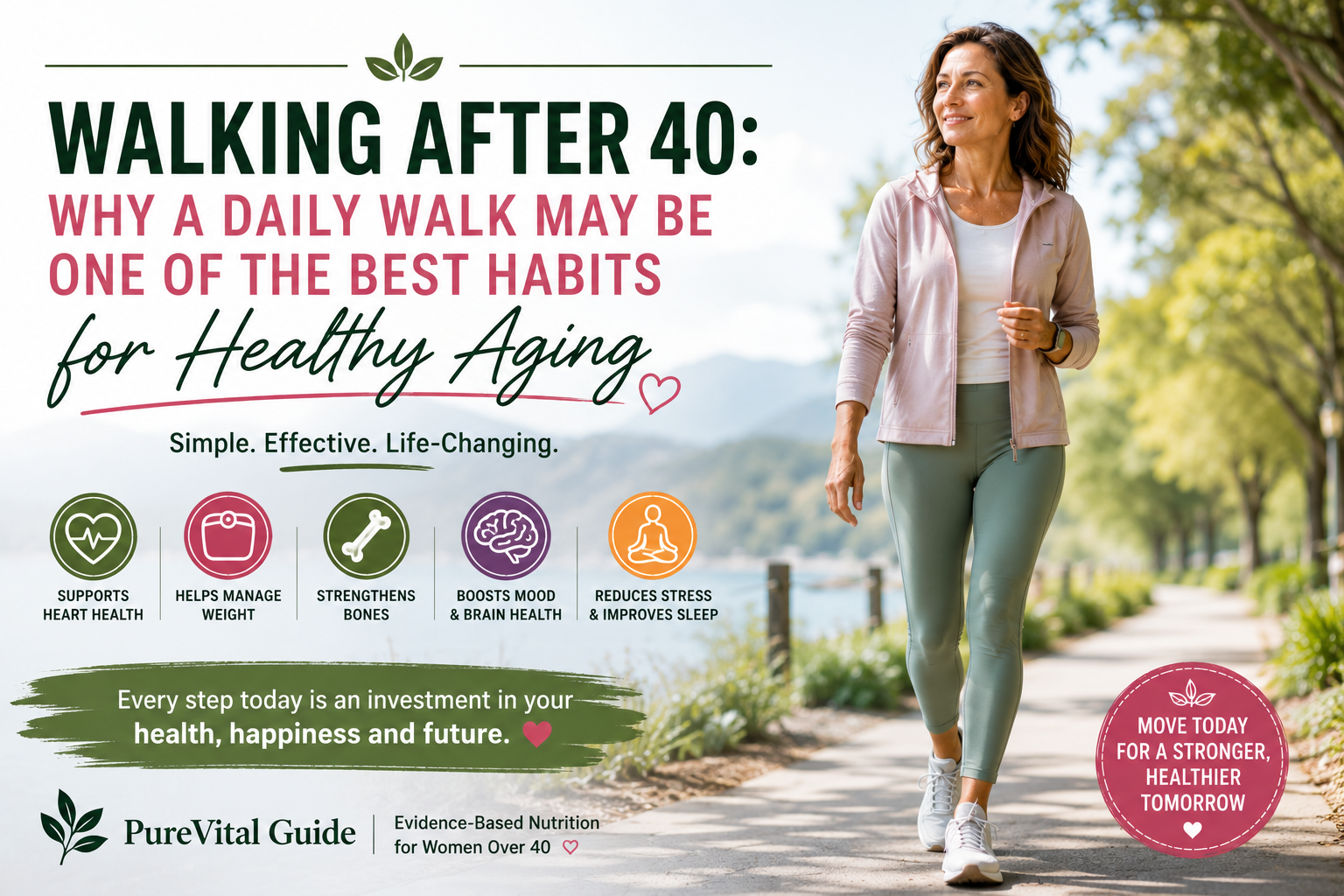
Walking After 40: Why a Daily Walk May Be One of the Best Habits for Healthy Aging
Last Updated: July 2026
Walking After 40: Why a Daily Walk May Be One of the Best Habits for Healthy Aging
When people think about improving their health, they often imagine intense workouts, expensive gym memberships, or complicated fitness programs.
The truth is that one of the most effective forms of exercise is also one of the simplest: walking.
For women over 40, regular walking offers a low-impact, accessible way to stay active while supporting overall health. Whether your goal is to improve cardiovascular fitness, maintain mobility, manage stress, or simply feel more energetic, adding a daily walk to your routine can make a meaningful difference.
The best part? You don’t need special equipment or advanced athletic ability to begin. A comfortable pair of walking shoes and a few minutes each day are enough to get started.
Quick Summary
In this guide, you’ll learn:
- Why walking becomes increasingly valuable after age 40.
- The physical and mental health benefits of walking.
- How much walking experts generally recommend.
- Tips for creating a sustainable walking routine.
- Common mistakes to avoid.
- Frequently asked questions.

Why Walking Is So Important After 40
As we age, maintaining regular physical activity becomes increasingly important for preserving strength, balance, cardiovascular health, and independence.
Walking is a weight-bearing activity that encourages movement without placing excessive stress on the joints, making it an excellent option for many adults.
Regular walking may help support:
- Heart health
- Healthy blood pressure
- Bone health
- Muscle endurance
- Balance and coordination
- Mental well-being
- Energy levels
- Healthy weight management
10 Benefits of Walking Every Day
1. Supports Heart Health
Walking increases your heart rate and improves circulation, helping support a healthy cardiovascular system when practiced consistently.
2. Helps Maintain a Healthy Weight
Combined with balanced nutrition, walking contributes to daily energy expenditure and can be part of a healthy weight management plan.
3. Strengthens Bones
Because walking is a weight-bearing exercise, it helps stimulate bones and complements a bone-friendly lifestyle.
4. Supports Joint Mobility
Regular movement helps keep joints flexible and muscles active.
For many people, walking feels more comfortable than high-impact activities like running.
5. Improves Mood
Physical activity encourages the release of endorphins and other brain chemicals associated with positive mood.
Even a short walk outdoors can help many people feel refreshed.
6. Boosts Energy
It may seem surprising, but moving your body often increases energy rather than draining it.
Many people report feeling more alert after a brisk walk.
7. Improves Sleep Quality
Regular daytime activity may contribute to healthier sleep patterns when combined with good sleep habits.
8. Supports Brain Health
Research suggests that regular physical activity supports healthy brain aging and cognitive function.
Walking also encourages blood flow throughout the body, including the brain.
9. Reduces Sedentary Time
Many adults spend long hours sitting.
Adding walks throughout the day helps break up prolonged periods of inactivity.
10. Fits Almost Any Lifestyle
Walking requires very little equipment, can be done almost anywhere, and is easy to adapt to different fitness levels.

How Much Walking Is Recommended?
General physical activity guidelines recommend that adults aim for at least 150 minutes of moderate-intensity aerobic activity per week.
That can be achieved in many ways, including:
- 30 minutes a day, five days a week.
- Three 10-minute walks throughout the day.
- Longer weekend walks combined with shorter weekday sessions.
Remember that every step counts. If you’re just beginning, even 10 minutes is a great place to start.
How to Build a Sustainable Walking Routine
Start Small
If you’ve been inactive, begin with 10–15 minutes and gradually increase your walking time.
Wear Comfortable Shoes
Supportive footwear can improve comfort and reduce the risk of discomfort or injury.
Walk at Your Own Pace
A pace that slightly increases your breathing while still allowing conversation is a good target for moderate-intensity walking.
Stay Hydrated
Bring water on longer walks, especially in warm weather.
Make It Enjoyable
Listen to music, podcasts, or audiobooks, or invite a friend to join you.
Consistency matters more than speed.
Common Walking Mistakes
Avoid these common habits:
- Wearing worn-out shoes.
- Increasing distance too quickly.
- Skipping warm-up or cool-down time.
- Walking with poor posture.
- Ignoring pain or persistent discomfort.
- Forgetting sunscreen when walking outdoors.

Simple Ways to Walk More Every Day
- Park farther from the entrance.
- Take the stairs when possible.
- Walk during phone calls.
- Schedule a morning or evening walk.
- Take a short walk after meals.
- Explore local parks or nature trails on weekends.
Small changes add up over time.
Frequently Asked Questions
Is walking enough exercise after 40?
Walking is an excellent foundation for an active lifestyle. For optimal health, it’s also beneficial to include strength training, flexibility exercises, and balance activities throughout the week.
How fast should I walk?
Aim for a brisk pace that raises your heart rate while still allowing you to speak in short sentences.
Is it better to walk in the morning or evening?
The best time is the one that fits your schedule consistently. Morning walks may boost energy for the day, while evening walks can help many people unwind.
Can walking help with stress?
Yes. Regular walking, especially outdoors, may support mental well-being and help reduce everyday stress when combined with other healthy lifestyle habits.
Should I walk every day?
Many people enjoy walking daily. If you’re new to exercise or have a medical condition, speak with your healthcare provider about the routine that’s right for you.
Final Thoughts
Walking may seem simple, but its long-term impact can be remarkable.
For women over 40, a regular walking routine supports heart health, mobility, emotional well-being, and healthy aging—all without requiring expensive equipment or complicated workout plans.
The key is consistency.
Start where you are, walk at your own pace, and celebrate every step toward a healthier future.
Remember, healthy living isn’t about perfection—it’s about making sustainable choices that support your body and mind every day.
Scientific References
This article is based on educational resources from respected organizations, including:
- World Health Organization (WHO)
- American Heart Association
- Centers for Disease Control and Prevention (CDC)
- National Institutes of Health (NIH)
- Harvard T.H. Chan School of Public Health
- Mayo Clinic

Medical Disclaimer
This article is for educational purposes only and should not be considered medical advice. Before beginning a new exercise routine, consult your healthcare provider, especially if you have a chronic medical condition, recent injury, or concerns about physical activity.n.
Related Articles
- How to Boost Your Metabolism After 40 Naturally
- Best Calcium-Rich Foods for Women Over 40
- Anti-Inflammatory Foods for Women Over 40
- The Mediterranean Diet for Women Over 40
- Protein After 40: Why Women Need More Than They Think
- How to Reduce Stress Naturally After 40
Key Takeaways
- Walking is one of the simplest and most effective ways to stay active after 40.
- Regular walks can support heart health, bone strength, mobility, mood, and energy.
- You don’t need to walk long distances to experience benefits—consistency is what matters.
- Pair walking with strength training, balanced nutrition, and quality sleep for a well-rounded healthy lifestyle.
- Every step is an investment in your long-term health and independence.






2 Comments