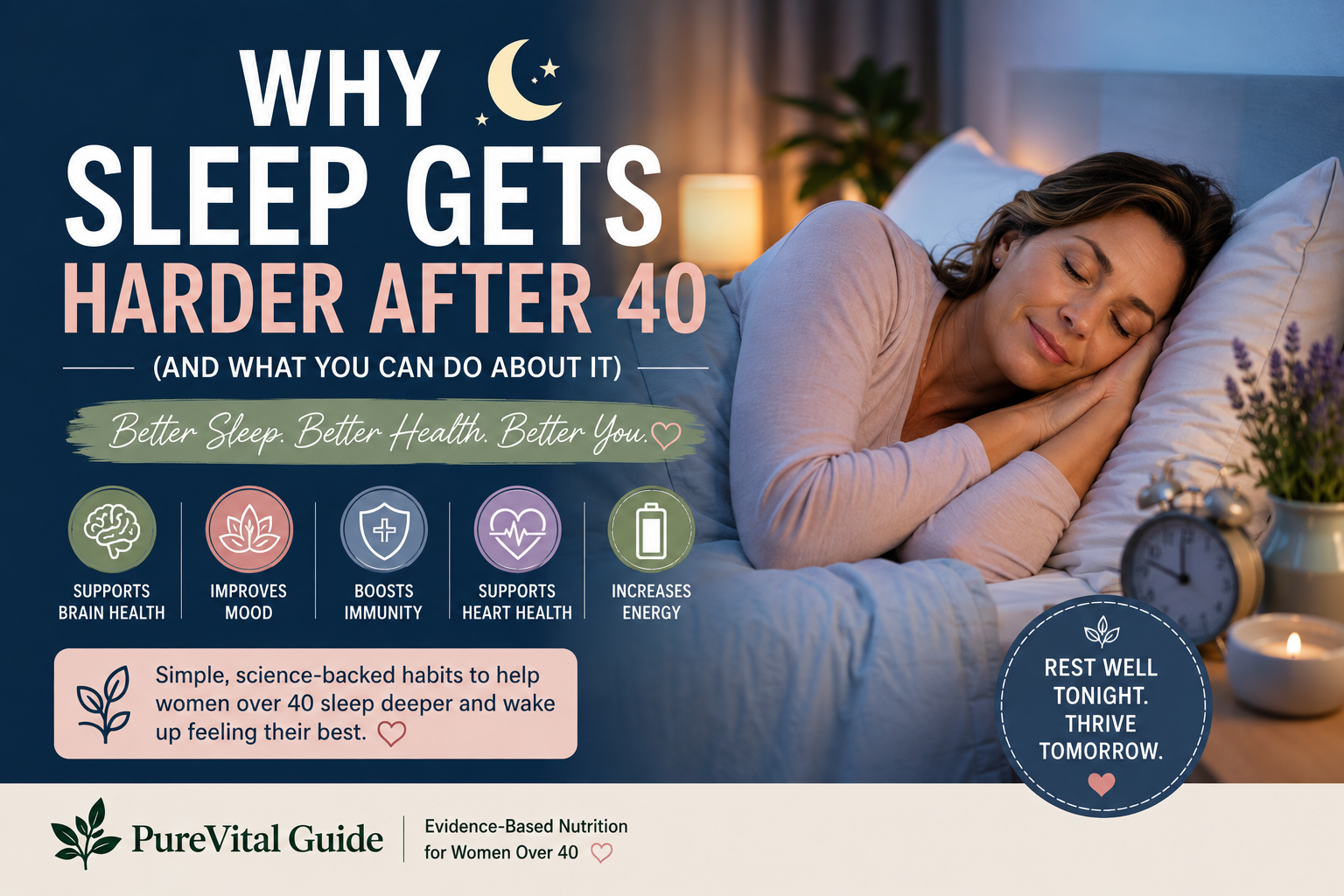
Why Sleep Gets Harder After 40 (And What You Can Do About It)
Last Updated: July 2026
Why Sleep Gets Harder After 40 (And What You Can Do About It)
Have you found yourself waking up in the middle of the night more often than you used to? Or perhaps you fall asleep easily but wake up feeling like you never truly rested.
If so, you’re far from alone.
Many women notice changes in their sleep during their 40s and beyond. Nights that once felt effortless may become interrupted, lighter, or less refreshing. While these changes can be frustrating, they are also common and often influenced by several factors that naturally evolve with age.
Sleep is much more than simply “getting enough hours.” High-quality sleep plays an essential role in physical recovery, emotional well-being, memory, immune function, metabolism, and overall health.
The encouraging news is that healthy daily habits can make a meaningful difference. Understanding why sleep changes after 40 is the first step toward improving it.
In this guide, we’ll explore the science behind sleep, common reasons sleep becomes more challenging during midlife, and practical strategies that can help you wake up feeling more refreshed.
Quick Summary
Inside this guide you’ll learn:
- Why sleep often changes after age 40.
- How hormones, lifestyle, and aging influence sleep quality.
- Common sleep challenges women experience.
- Healthy bedtime habits supported by research.
- Practical ways to improve sleep naturally.
Why Sleep Changes After 40
Sleep is influenced by many systems working together, including the brain, hormones, metabolism, and your internal body clock (circadian rhythm).
As women approach perimenopause and menopause, changing hormone levels—particularly estrogen and progesterone—may influence sleep quality. These hormonal shifts can coincide with symptoms such as night sweats, hot flashes, or changes in mood, all of which may contribute to nighttime awakenings.
At the same time, other factors often become more significant:
- Increased work responsibilities.
- Caring for children or aging parents.
- Higher stress levels.
- Reduced physical activity.
- Medical conditions that become more common with age.
- Greater sensitivity to caffeine or alcohol.
Because sleep is affected by many different factors, improving it often requires looking at your overall lifestyle rather than focusing on a single solution.

Why Quality Sleep Matters
Sleep isn’t simply “downtime.”
While you rest, your body performs countless important processes that support long-term health.
Quality sleep helps support:
Brain Function
During sleep, the brain processes information, consolidates memories, and prepares for learning the next day.
Emotional Well-Being
Poor sleep may affect mood, patience, and emotional resilience.
Many people find it more difficult to cope with everyday stress after several nights of inadequate sleep.
Heart Health
Healthy sleep is one of several lifestyle factors that support cardiovascular health alongside regular exercise and balanced nutrition.
Immune Function
Sleep plays an important role in helping your immune system function normally.
Healthy Metabolism
Research continues to explore how sleep influences appetite regulation, energy balance, and metabolic health.
Muscle Recovery
Sleep allows muscles and other tissues time to recover after daily activity and exercise.
The Science Behind Sleep and Aging
Adults continue to need approximately 7–9 hours of sleep per night, even as they age.
However, the structure of sleep naturally changes over time.
Some common age-related changes include:
- Spending less time in deep sleep.
- Waking more frequently during the night.
- Falling asleep earlier in the evening.
- Waking earlier in the morning.
- Becoming more sensitive to environmental noise.
These changes are normal, but persistent sleep problems should always be discussed with a healthcare professional.
Common Sleep Challenges After 40
Many women experience one or more of these concerns:
Difficulty Falling Asleep
Stress, anxiety, irregular schedules, and excessive screen time may all contribute.
Waking During the Night
Interrupted sleep is one of the most common complaints after 40.
Night sweats, stress, noise, or bathroom trips may all play a role.
Early Morning Awakening
Some women find themselves waking much earlier than planned and struggling to fall back asleep.
Feeling Unrested
Even after spending enough time in bed, poor sleep quality may leave you feeling tired the next day.
Snoring or Sleep Apnea
Loud snoring, pauses in breathing during sleep, or excessive daytime sleepiness should be evaluated by a healthcare provider, as they may indicate obstructive sleep apnea.

10 Healthy Habits for Better Sleep
1. Keep a Consistent Sleep Schedule
Going to bed and waking up at approximately the same time each day helps reinforce your body’s natural circadian rhythm.
Even on weekends, try to avoid large changes in your sleep schedule.
2. Create a Relaxing Evening Routine
Give your body time to transition from a busy day to restful sleep.
Good options include:
- Reading a book.
- Gentle stretching.
- Deep breathing.
- Meditation.
- Listening to calming music.
3. Reduce Screen Time Before Bed
Phones, tablets, and televisions emit blue light that may interfere with your body’s natural production of melatonin.
Aim to reduce screen exposure during the last hour before bedtime.
4. Stay Physically Active
Regular movement during the day supports overall health and may contribute to better sleep quality.
Walking, strength training, cycling, yoga, and swimming are all excellent choices.
5. Eat a Balanced Dinner
Very heavy meals shortly before bed may leave some people feeling uncomfortable.
Instead, choose balanced meals that include:
- Lean protein.
- Vegetables.
- Whole grains.
- Healthy fats.
6. Watch Your Caffeine Intake
Some adults become more sensitive to caffeine with age.
If you’re having trouble sleeping, consider avoiding coffee, energy drinks, or strong tea later in the afternoon.
7. Keep Your Bedroom Comfortable
Create an environment that encourages sleep:
- Cool temperature.
- Minimal noise.
- Comfortable mattress and pillows.
- Dark curtains or an eye mask if needed.
8. Manage Daily Stress
Long-term stress often shows up at bedtime.
Simple practices like journaling, mindfulness, or breathing exercises may help you relax before sleep.
9. Limit Alcohol Before Bed
Although alcohol may initially make you feel sleepy, it can interfere with normal sleep later in the night and reduce sleep quality.
10. Be Patient
Healthy sleep habits rarely produce overnight results.
Small, consistent improvements practiced over several weeks often lead to the greatest long-term benefits.
Related Articles
Continue learning with these guides from PureVital Guide:
- Morning Habits for Women Over 40
- Walking After 40: Why a Daily Walk May Be One of the Best Habits for Healthy Aging
- Anti-Inflammatory Foods for Women Over 40
- The Mediterranean Diet for Women Over 40
- Best Calcium-Rich Foods for Women Over 40
Foods That May Support Better Sleep
While no single food can guarantee a perfect night’s sleep, a balanced eating pattern may support healthy sleep as part of an overall healthy lifestyle.
Some foods naturally contain nutrients involved in normal sleep regulation.
1. Cherries
Tart cherries naturally contain small amounts of melatonin and antioxidant compounds.
Enjoy them fresh, frozen, or as unsweetened tart cherry juice in moderation.
2. Kiwi
Kiwis provide vitamin C, fiber, and antioxidants.
They’re a refreshing evening snack and can easily be paired with yogurt.
3. Greek Yogurt
Greek yogurt is rich in protein and calcium.
A small serving paired with berries or nuts makes a balanced evening snack.
4. Oats
Whole oats contain fiber and complex carbohydrates that promote steady energy.
Warm oatmeal can be a comforting light meal before bedtime.
5. Almonds
Almonds provide magnesium, healthy fats, protein, and fiber.
A small handful is often enough.
6. Pumpkin Seeds
Pumpkin seeds naturally contain magnesium and plant protein.
Sprinkle them over salads, yogurt, or oatmeal.
7. Fatty Fish
Salmon, sardines, trout, and mackerel provide omega-3 fatty acids and vitamin D, nutrients that support overall health.
8. Herbal Tea
Caffeine-free herbal teas such as chamomile or peppermint can become part of a relaxing bedtime routine.
Choose varieties without added sugar.
Evening Habits That Can Disrupt Sleep
Sometimes improving sleep is less about adding new habits and more about avoiding behaviors that interfere with rest.
Try to limit:
- Large meals immediately before bed
- Excess caffeine late in the day
- Alcohol close to bedtime
- Nicotine
- Bright screens in the hour before sleep
- Intense exercise immediately before bed (if it affects your sleep)
- Long daytime naps
Everyone is different, so pay attention to which habits affect your own sleep.

A 3-Day Sleep-Friendly Evening Routine
Day 1
Dinner
Grilled salmon with roasted vegetables and quinoa.
Evening Activity
Take a relaxing 20-minute walk after dinner.
Bedtime Routine
- Turn off electronic devices one hour before bed.
- Read a book for 20 minutes.
- Practice five minutes of deep breathing.
Day 2
Dinner
Mediterranean lentil soup with whole-grain bread and a mixed green salad.
Evening Activity
Gentle stretching or beginner yoga for 15 minutes.
Bedtime Routine
- Drink a cup of chamomile tea.
- Dim household lights.
- Write down tomorrow’s priorities to clear your mind.
Day 3
Dinner
Grilled chicken with steamed broccoli, brown rice, and avocado.
Evening Activity
Listen to calming music or a guided meditation.
Bedtime Routine
- Keep your bedroom cool and dark.
- Avoid checking your phone.
- Go to bed at your usual time.
Bedroom Optimization Checklist
Creating a sleep-friendly environment can make a noticeable difference.
✔ Keep the room cool.
✔ Reduce outside noise when possible.
✔ Use blackout curtains if early morning light wakes you.
✔ Choose a supportive mattress and comfortable pillows.
✔ Keep electronic devices away from the bed.
✔ Reserve your bedroom primarily for sleep and relaxation.
Frequently Asked Questions
How many hours of sleep do women over 40 need?
Most adults, including women over 40, benefit from 7–9 hours of sleep per night, though individual needs vary.
Is it normal to wake up during the night?
Brief awakenings are common. However, frequent or prolonged awakenings that affect daytime functioning should be discussed with a healthcare professional.
Does exercise improve sleep?
Regular physical activity is associated with better sleep quality for many people.
Walking, strength training, swimming, and yoga are excellent options.
Should I take melatonin supplements?
Melatonin supplements may be appropriate in some situations, but they should only be used under the guidance of a qualified healthcare professional.
Can menopause affect sleep?
Yes.
Hormonal changes during perimenopause and menopause can contribute to hot flashes, night sweats, and changes in sleep quality.
If symptoms become severe, speak with your healthcare provider.
Final Thoughts
Better sleep isn’t about finding a single miracle solution.
Instead, it’s the result of consistent daily habits that support your body’s natural sleep cycle.
Simple actions—such as staying active, eating a balanced diet, limiting caffeine later in the day, creating a relaxing bedtime routine, and maintaining a consistent sleep schedule—can all contribute to more restorative sleep.
Remember that occasional restless nights are a normal part of life.
Focus on progress rather than perfection, and give your new habits time to become part of your routine.
Healthy sleep is one of the greatest investments you can make in your long-term health, supporting everything from energy and mood to heart health and healthy aging.

Scientific References
The information in this article is based on educational resources from trusted organizations, including:
- National Institutes of Health (NIH)
- National Institute on Aging
- American Academy of Sleep Medicine
- Centers for Disease Control and Prevention (CDC)
- Harvard T.H. Chan School of Public Health
- Mayo Clinic
Medical Disclaimer
This article is intended for educational purposes only and should not be considered medical advice.
Persistent insomnia, loud snoring, pauses in breathing during sleep, or excessive daytime fatigue should be evaluated by a qualified healthcare professional.
Never begin supplements or medications without personalized medical guidance.
Key Takeaways
- Sleep naturally changes with age, but healthy habits can support better rest.
- A consistent sleep schedule, regular physical activity, and a balanced diet all contribute to healthy sleep.
- Foods rich in magnesium, protein, and other beneficial nutrients can be part of a sleep-friendly eating pattern.
- A calm, comfortable bedroom environment supports restorative sleep.
- If sleep problems are frequent or severe, seek advice from a qualified healthcare professional.
At PureVital Guide, we believe that quality sleep is one of the foundations of healthy aging. Combined with good nutrition, regular movement, and effective stress management, better sleep can help you feel stronger, more energized, and ready to enjoy each day.






One Comment